
By Shyamal Kashyap
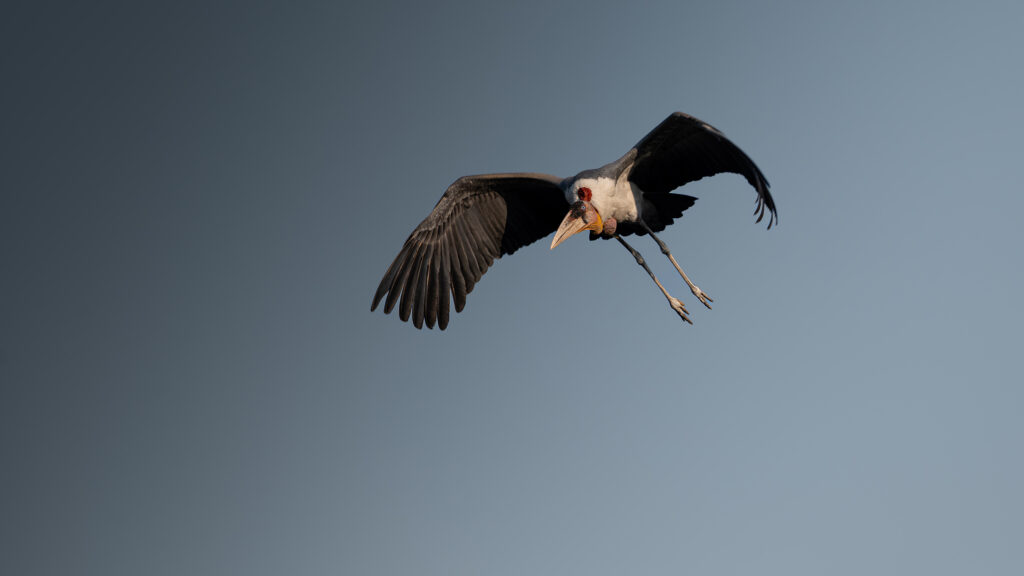
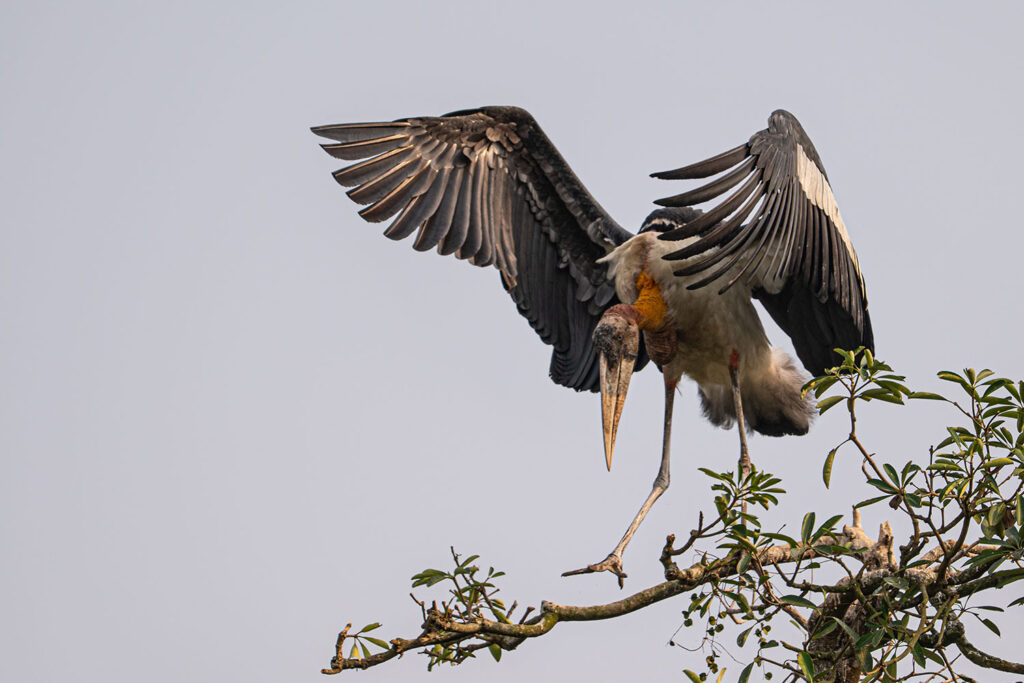
The morning mist hangs low over the wetlands as an enormous silhouette settles atop a towering tree. Bald-headed, heavy-billed, and almost prehistoric in appearance, the bird seems less like a creature of the modern world than a survivor from another age. When it finally spreads its immense wings and lifts into the rising air, however, the transformation is remarkable. The awkward giant becomes an effortless master of the thermals, circling high above the landscape with quiet authority.
This is the Greater Adjutant (Leptoptilos dubius), one of the world’s rarest storks and among its most extraordinary. Standing more than 1.5 metres tall and possessing a wingspan that can exceed 2.5 metres, it is one of the largest flying birds in Asia. Once widespread across vast stretches of South and Southeast Asia, the species suffered a dramatic decline during the twentieth century, disappearing from many parts of its former range.
Today, however, the Greater Adjutant is becoming a symbol of hope. After decades of decline, its conservation story demonstrates that recovery is possible when communities, conservationists, and nature find common ground.
“Sometimes conservation begins not with saving a species, but with changing the way we see it.”
A Bird from another Era
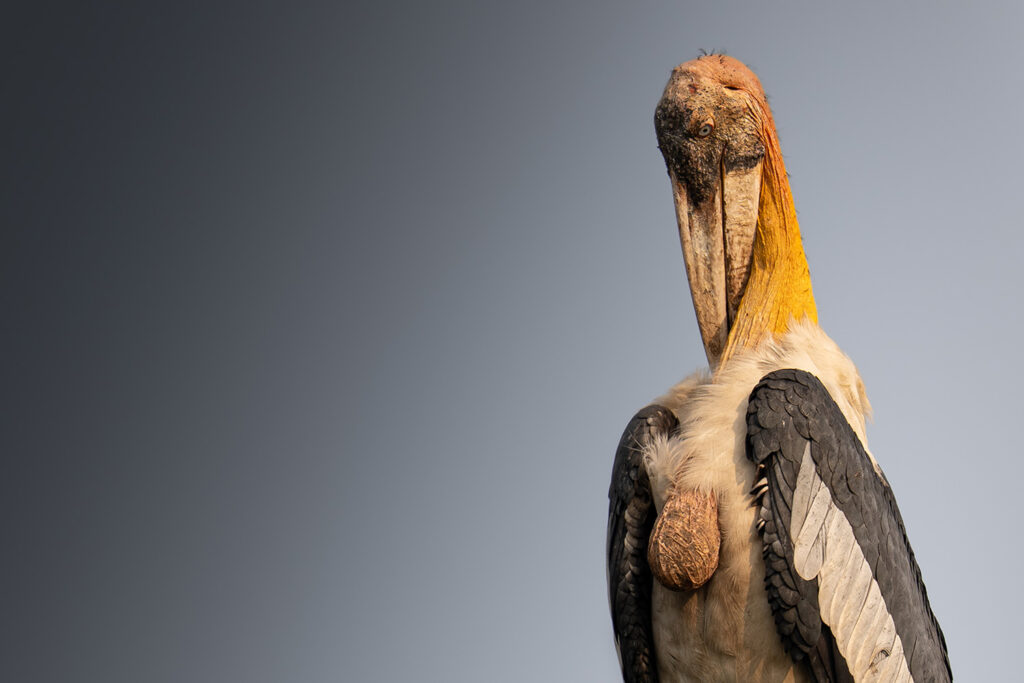
Few birds inspire such mixed reactions. The Greater Adjutant’s featherless head, massive bill, and pendulous neck pouch have often led people to describe it as ugly or intimidating. Yet these unusual features are the product of millions of years of evolution.
Like vultures, the stork’s bald head serves a practical purpose. Feeding on carrion can be a messy business, and the absence of feathers helps keep the bird clean while reducing the risk of infection. What may appear strange to human eyes is, in fact, a highly effective adaptation.
Its scientific name, Leptoptilos dubius, reflects a lineage that has survived immense environmental changes over time. Watching a Greater Adjutant stride through shallow wetlands or soar high above the landscape, it is easy to imagine a world long before cities, roads, and modern development reshaped the land.
Yet despite its ancient appearance, the bird’s future became alarmingly uncertain.
Throughout much of its historical range, wetlands were drained, forests were cleared, and large nesting trees disappeared. Human expansion steadily eroded the habitats upon which the species depended. By the latter half of the twentieth century, the Greater Adjutant had vanished from many regions where it had once been common.
As populations declined, the species found itself listed among the world’s threatened birds. For a time, its survival appeared far from certain.
Nature’s Unseen Custodian
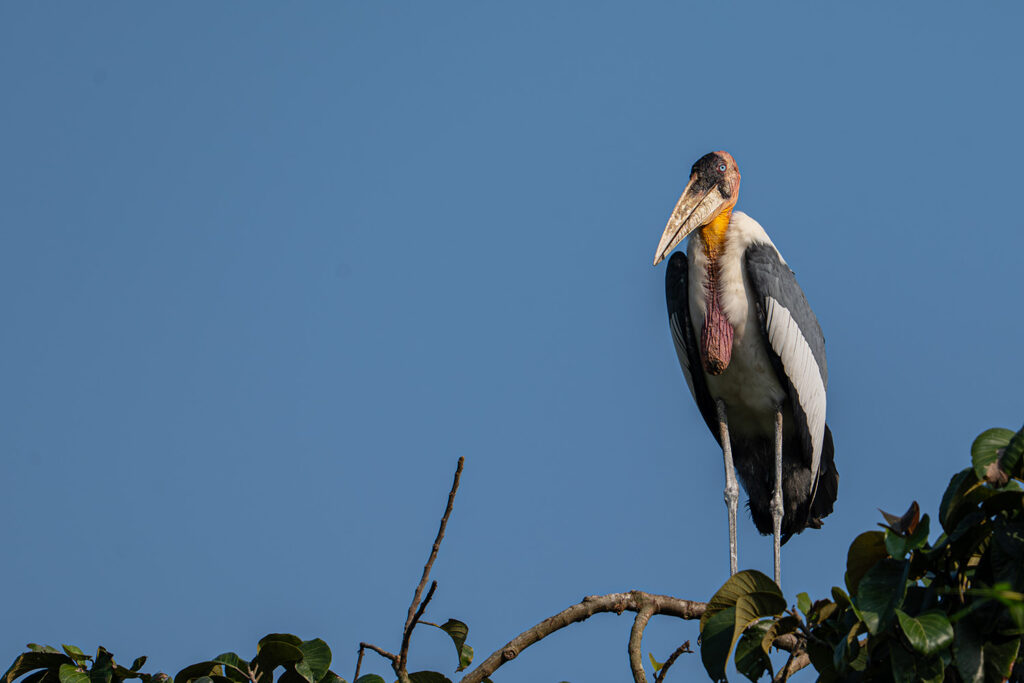
The Greater Adjutant occupies a role that few other birds can perform so effectively. It is a scavenger, feeding on carrion, animal remains, and organic waste that would otherwise accumulate across the landscape.
While many people admire predators and colourful songbirds, scavengers rarely receive the same appreciation. Yet these species perform essential ecological services.
By consuming decaying matter, the Greater Adjutant helps limit the spread of disease and accelerates the recycling of nutrients back into the ecosystem. In wetlands, it also feeds on fish, frogs, snakes, crustaceans, and small mammals, making it an important part of complex food webs.
In many ways, the bird functions as one of nature’s sanitation workers.
“The Greater Adjutant is not merely a scavenger—it is one of nature’s oldest and most effective recyclers.”
Its ecological importance extends beyond waste removal. Like many scavenging species, the Greater Adjutant serves as a living sentinel of environmental health. Its survival depends upon functioning wetlands, healthy aquatic systems, and landscapes capable of supporting diverse wildlife.
Where these giant storks continue to thrive, the surrounding ecosystem often retains much of its natural richness
Living Between Wetlands and People
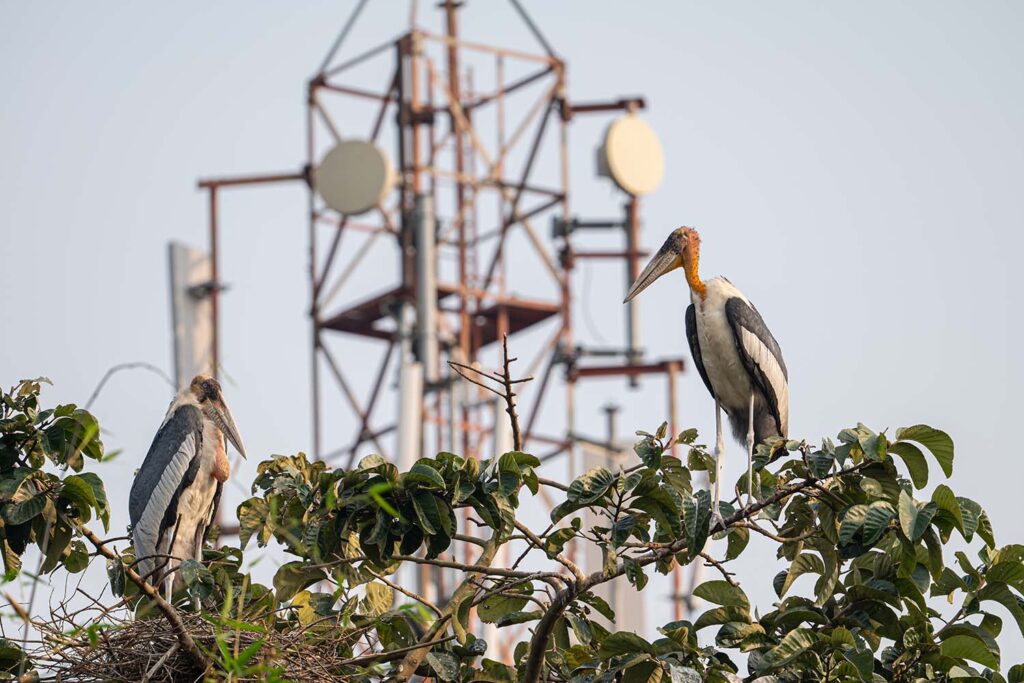
Unlike many threatened species that retreat from human activity, the Greater Adjutant has developed a remarkable relationship with people.
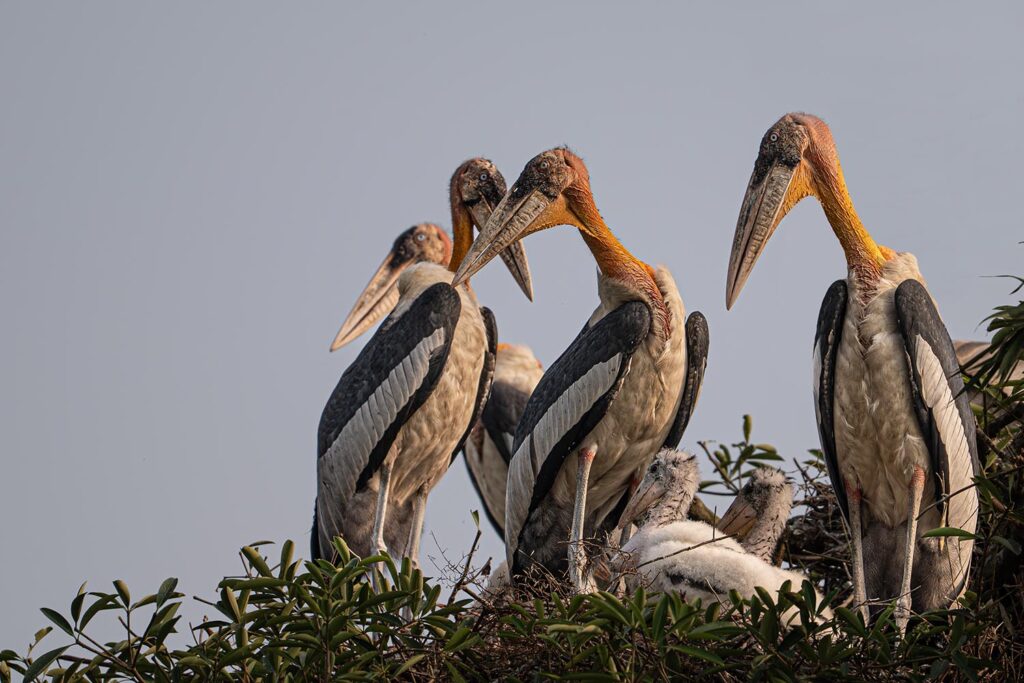
The bird often nests in tall trees near villages, towns, and agricultural landscapes. Massive stick nests, sometimes exceeding a metre in diameter, are constructed high above the ground. During the breeding season, pairs typically raise one to three chicks, returning repeatedly to nearby wetlands in search of food.
For generations, these towering birds have shared space with human communities.
The relationship has not always been positive. In the past, nesting trees were often cut down, and the birds themselves were viewed with suspicion. Their scavenging habits and unusual appearance made them easy targets for misunderstanding.
Yet attitudes gradually began to change.
As awareness of the species grew, communities started protecting nesting trees rather than removing them. Fallen chicks were rescued and rehabilitated. Local residents became active participants in conservation rather than passive observers.
The result has been one of the most encouraging bird conservation stories in South Asia.
A Remarkable Recovery
The recovery of the Greater Adjutant did not happen overnight.
It emerged through years of patient conservation work, scientific monitoring, habitat protection, and community engagement. Conservationists worked alongside local residents to safeguard nesting colonies and reduce threats to breeding birds.
Slowly, the population began to stabilize.
More nests survived each breeding season. More chicks fledged successfully. Colonies that once seemed vulnerable began showing signs of growth.
Today, the species has achieved an important conservation milestone. Once classified as Endangered, the Greater Adjutant is now listed as Near Threatened, reflecting significant improvements in its status.
The change represents far more than a shift in classification. It is evidence that determined conservation efforts can reverse decline when given sufficient time and support.
For a species that once stood perilously close to disappearing from large parts of its range, the recovery offers a rare and valuable source of optimism.
Wetlands: The Foundation of Survival
The story of the Greater Adjutant is inseparable from the story of wetlands.
These ecosystems are often overlooked because they do not possess the dramatic appeal of mountains or dense forests. Yet wetlands rank among the most productive environments on Earth.
They store floodwaters, filter pollutants, recharge groundwater, and support extraordinary biodiversity. Fish, amphibians, reptiles, insects, and waterbirds all depend upon these habitats.
The Greater Adjutant depends on them as well.
When wetlands disappear, the bird loses feeding grounds. When water quality declines, food resources diminish. When natural landscapes become fragmented, breeding colonies become increasingly isolated.
Protecting the stork therefore means protecting far more than a single species. It means safeguarding entire ecological communities.
The future of the Greater Adjutant and the future of healthy wetlands remain deeply connected.
Challenges Still Loom
Despite encouraging progress, the species continues to face serious threats.
Wetlands remain vulnerable to drainage, pollution, and development. Large nesting trees are still removed in some areas. Power lines present a risk of collision and electrocution. Plastic waste and other non-biodegradable materials continue to contaminate feeding grounds.
Ironically, the bird’s ability to exploit human waste can also expose it to danger. Individuals feeding at garbage dumps may ingest plastic or encounter toxic substances hidden among organic refuse.
Climate change introduces additional uncertainty.
Extreme weather events, prolonged heatwaves, unpredictable rainfall, and severe flooding all have the potential to affect breeding success and habitat availability. Nesting colonies situated high above the ground may still be vulnerable to increasingly intense storms.
For a species that has only recently begun recovering, these pressures cannot be ignored.
Conservation success remains a process rather than a destination.
Changing Hearts, Changing Futures
Perhaps the most remarkable aspect of the Greater Adjutant’s recovery has been the transformation in public perception.
Once viewed as a symbol of bad luck or uncleanliness, the bird is increasingly recognised as an important component of the natural world. Its image now appears in educational programmes, conservation campaigns, artwork, and community initiatives.
This shift may represent the species’ greatest achievement.
Laws can protect habitats. Scientific research can identify threats. Conservation projects can provide resources.
But lasting protection often begins when people develop a sense of connection with the wildlife around them.
When communities value a species, conservation becomes more resilient.
The story of the Greater Adjutant demonstrates how changing attitudes can alter the fate of an entire population.
Lessons from a Giant Stork
The revival of the Greater Adjutant offers lessons that extend well beyond a single bird.
It reminds us that conservation is not always a story of loss. Sometimes it is a story of recovery. Sometimes species can return from the brink when given space, protection, and understanding.
It also challenges conventional ideas about beauty in nature.
Not every species possesses bright feathers or elegant songs. Some contribute in quieter ways, performing ecological tasks that sustain entire ecosystems. The Greater Adjutant’s value lies not in its appearance, but in the role it plays within the living landscape.
Its survival demonstrates that every species, no matter how misunderstood, has a place in the natural world.
A Sky Shared Once More
As evening settles across the wetlands, the silhouettes of Greater Adjutants drift steadily toward their roosts. Their immense wings catch the final light of day as they glide above water, grassland, and scattered trees.
They have survived habitat loss, misunderstanding, and decades of decline. Against considerable odds, they continue to return with the changing seasons.
Their recovery reminds us that conservation is rarely about saving a single species. It is about restoring the relationships that connect people, wildlife, and the landscapes they share.
In protecting the Greater Adjutant, we also protect wetlands, biodiversity, and the ecological processes that sustain life itself.
The giant stork’s journey from the brink of extinction to a more hopeful future stands as a powerful reminder that recovery is possible. It is a testament to resilience, coexistence, and the enduring capacity of nature to heal when given the chance.
In the end, perhaps it is not we who have saved the stork, but the stork that has reminded us what it truly means to live alongside the wild.