
By Shyamal Kashyap
Across Assam, elephants are increasingly moving through farms, villages, tea gardens and transport corridors built across landscapes they have used for generations. The resulting conflict is costly for both people and wildlife.
As darkness settles over the fields of Assam, the attention of farmers can turn towards the edge of the forest.
The paddy is ready. The day’s work is almost finished. But for some families, the night brings another concern: elephants.
A sound in the darkness can be enough to send people outside with torches. The animals may already be moving through the fields, searching for food. People try to drive them away before crops are destroyed. Sometimes the encounter ends without injury. Sometimes it does not.
For the elephants, there is no clear boundary between forest and farmland. A field may lie across a route that animals have used for years. A railway line may cut through a traditional movement path. A tea plantation may now occupy land that once formed part of a more diverse forest.
What appears to be a sudden encounter is often the final stage of a much longer process.
Assam’s human-elephant conflict is not simply a problem of elephants entering villages. It is a sign of a landscape under pressure.
A landscape being divided
Assam occupies a crucial part of the eastern Himalayan and Brahmaputra landscape.
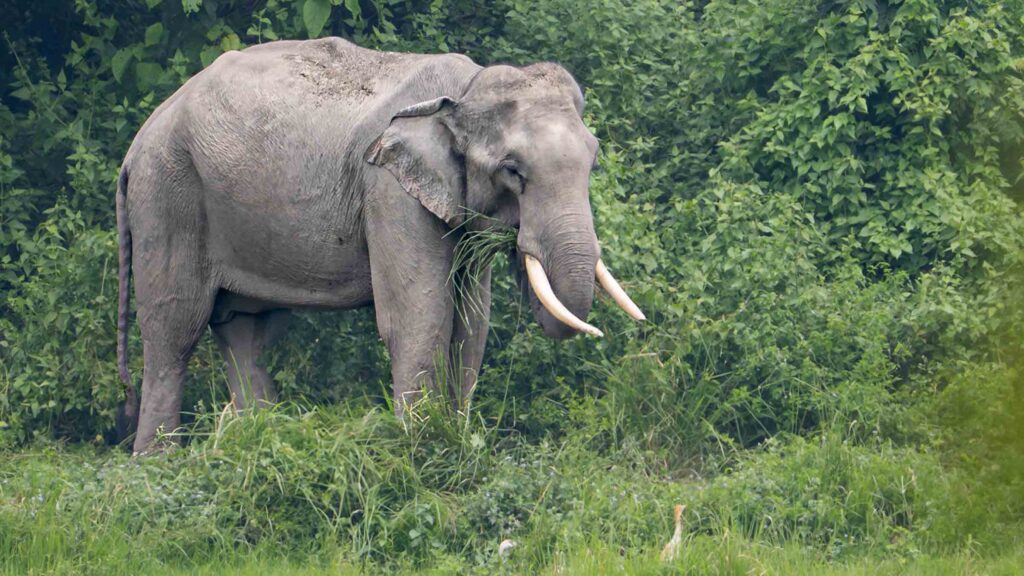
Its forests, grasslands, riverine areas and foothills support one of India’s important elephant populations. The Asian elephant (Elephas maximus) requires large areas to find food, water, shelter and safe routes between different parts of its range.
That requirement is becoming increasingly difficult to meet.
Across Assam, forests have been cleared or altered for agriculture, settlements, roads, industry and other forms of development. What remains is often separated into smaller patches.
For an animal that may travel considerable distances in search of seasonal resources, fragmentation can be more important than the loss of any single forest patch.
An elephant herd does not need only a place to sleep.
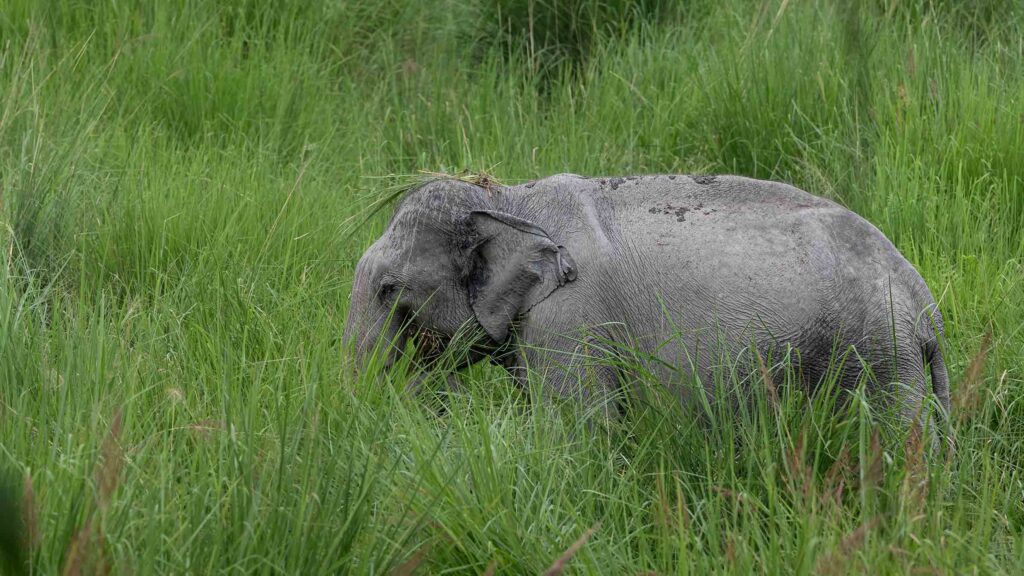
It needs somewhere to move.
When movement becomes difficult, elephants may take alternative routes through cultivated land or settlements. The result is an encounter that neither side necessarily intended.
The corridors elephants still remember
Elephant movement in Assam is closely connected to the wider landscapes of the eastern Himalaya.
Routes extend through areas associated with Assam, Arunachal Pradesh, Meghalaya and the hill landscapes of Karbi Anglong. These connections allow elephants to move between feeding areas, forests and seasonal resources.
An elephant does not understand administrative boundaries. In nature, there are no borders—only landscapes to move through.
A road can be built across one section of a movement route. A railway can cross another. A settlement can gradually expand into another part. Piece by piece, a route that once offered relatively safe passage becomes more difficult to use.
The problem is not always that a corridor disappears completely.
Sometimes it becomes narrower.
Sometimes it becomes disturbed.
Sometimes the animals can still pass, but only by moving through places occupied by people.
That is where conflict begins to become predictable.
When forests become tea gardens
The tea landscapes of Assam illustrate another part of the problem.
Tea gardens can provide open areas through which elephants sometimes move, and they can become temporary refuges when surrounding forests have been heavily altered.
But a tea plantation is not a substitute for a natural forest.
A diverse forest contains a variety of plants, trees, grasses and other resources. A commercial plantation is managed primarily for one crop.
When natural habitat is replaced by a monoculture, the landscape changes not only visually but ecologically.
An elephant emerging from a fragmented forest may find itself moving through a tea estate, along a road or beside human settlements. Workers and residents can suddenly find themselves sharing the same space with a large wild animal.
The proximity creates risk for everyone.
The search for water
Food is only part of the equation.
Water can influence elephant movement, particularly during periods when natural sources become scarce or degraded.
Forest streams, ponds and other water bodies may shrink or become inaccessible during dry periods. When this happens, elephants may move towards village ponds or other sources of water.
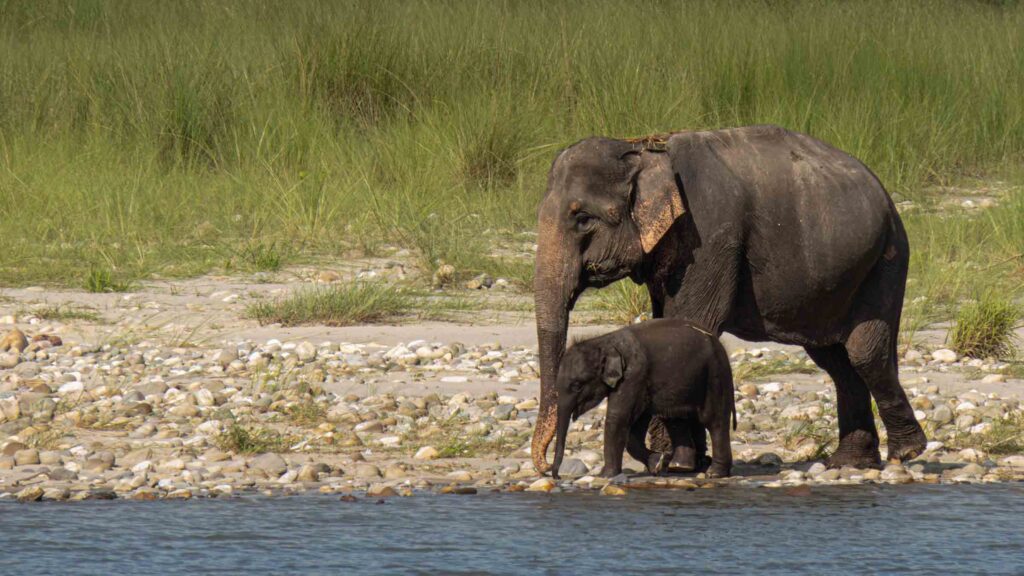
A village water source can therefore become part of an elephant’s landscape even though it was never intended to be wildlife habitat.
This is one reason why human-elephant conflict cannot be understood simply by looking at the place where an elephant was seen.
The important question is what brought it there.
A field can represent months of work
For a farmer, an elephant entering a crop field is not an abstract conservation issue.
It can mean the destruction of months of labour.
Paddy, maize and other crops can be damaged in a single night. For households with limited financial security, the loss can have consequences well beyond one harvest.
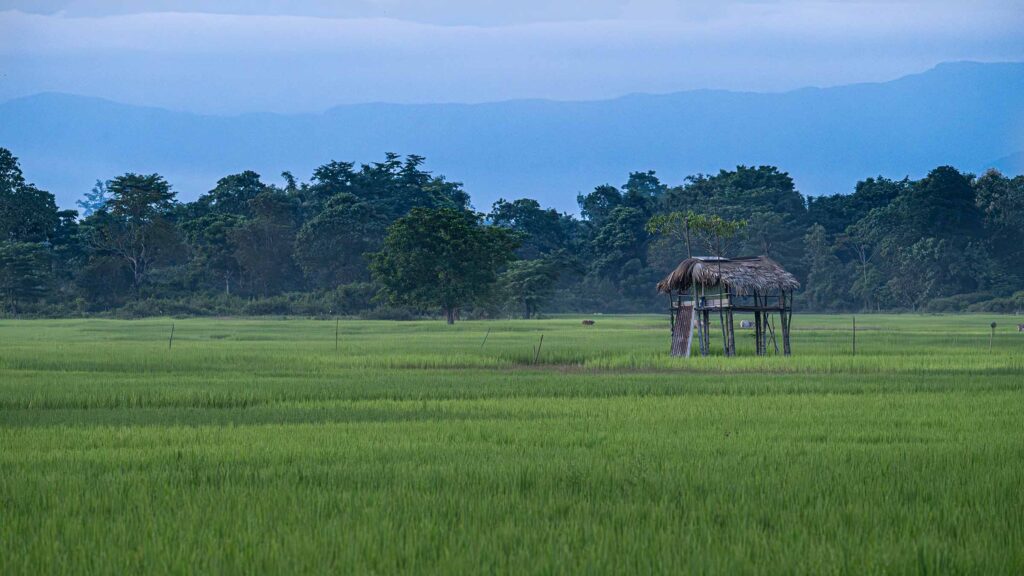
The economic impact is therefore an important part of the conflict.
When a crop is destroyed repeatedly, tolerance becomes harder to maintain. Fear can become anger. Anger can become hostility towards the animals.
This is where a conservation problem becomes a social one.
The human cost
The physical danger is equally serious.
People living close to elephant habitat may encounter elephants while guarding crops, travelling after dark or moving between homes and fields.
Many encounters happen at night, when visibility is poor and both people and elephants can be surprised by one another.
An elephant does not need to be aggressive for an encounter to become fatal. Its size, speed and strength mean that a frightened animal can cause devastating injuries.
For families who lose someone, the consequences continue long after the animal has moved away.
There is grief, financial pressure and often a lasting fear of the landscape around the home.
The same landscape that provides a livelihood can begin to feel dangerous.
When compensation does not arrive quickly enough
Governments have systems intended to provide financial relief after crop damage, property loss, injury or death.
But compensation is meaningful only when it reaches affected families in a reasonable time and through a process they can navigate.
Where the process is slow, complicated or poorly understood, frustration can deepen.
For a family that has already lost a harvest or a wage earner, waiting for assistance can reinforce the perception that the cost of conserving wildlife is being carried primarily by those living closest to it.
That perception matters.
Conservation depends not only on protecting animals, but also on whether the people sharing their landscape believe that the system recognises their losses.
The danger beyond the forest
Some of the most serious threats to elephants are not found inside forests at all.
Railways and roads can cut directly across movement routes.
For an elephant, a railway track may simply be another part of the landscape to cross. For a train travelling at speed, the same crossing can become fatal.
Assam has recorded elephant deaths on railway lines, and stretches of track passing through elephant habitat require particular attention.
The solutions are not always complicated in principle: identifying crossing points, monitoring elephant movement, controlling train speeds where necessary, improving communication and providing safer passage can all reduce risk.
But these measures work only when wildlife movement is treated as part of infrastructure planning rather than as an afterthought.
A road or railway does not have to stop development.
It does have to recognise the landscape through which it passes.
When electricity becomes a weapon
Another danger comes from electricity.
Poorly designed or illegally connected electric fencing can kill elephants that come into contact with live wires. In some places, deliberate attempts to protect crops can turn electrical infrastructure into a lethal barrier.
Poisoning and other forms of retaliation can also occur when conflict becomes severe.
These incidents are often described simply as wildlife crimes.
But the causes are more complicated.
A farmer facing repeated crop losses may see an elephant very differently from someone observing the species from a protected area.
That difference in perspective is central to understanding the problem.
Preventing retaliation requires more than enforcement. It requires reducing the conditions that produce desperation in the first place.
The loss of tolerance
Assam has a long history of people living alongside elephants.
Traditional knowledge of elephant movement, seasonal behaviour and warning signs has helped communities negotiate the risks of sharing the landscape.
But landscapes and livelihoods are changing.
Population growth, expanding infrastructure, changing agriculture and economic pressures have reduced the space in which traditional forms of coexistence can operate.
A village that once stood some distance from a forest may now be surrounded by expanding cultivation.
A movement route that was once relatively quiet may now cross a busy road.
The old balance can disappear without anyone making a single decision to remove it.
There is no single solution
Human-elephant conflict is sometimes presented as a choice between people and wildlife.
It is not.
The real challenge is to make a changing landscape safer for both.
That begins with protecting and restoring elephant corridors.
Important movement routes need to remain connected, particularly where forests are separated by farms, settlements and infrastructure. Restoration does not always mean recreating a forest exactly as it once was. It can mean keeping strategic stretches of land open and usable for elephant movement.
Water and food resources also matter.
Where degraded habitats can be restored, elephants may have fewer reasons to enter agricultural areas. Understanding seasonal movement can help identify where intervention is most likely to work.
Farmers need practical protection from crop loss.
Early-warning systems, community response teams, appropriate fencing and non-lethal deterrents can reduce encounters when they are designed for local conditions and supported over time.
Compensation systems need to be accessible and timely.
And infrastructure planners need to consider wildlife movement before roads and railways are built, rather than trying to solve the problem after collisions begin.
None of these measures will eliminate conflict.
But together, they can reduce its frequency and severity.
A shrinking frontier
The human-elephant conflict in Assam is ultimately a story about space.
There is less room for large animals to move through landscapes that are increasingly occupied, divided and engineered for human use.
At the same time, millions of people depend on those same landscapes for agriculture, employment, homes and transport.
The elephant is not deliberately crossing a human boundary.
The farmer is not deliberately destroying elephant habitat.
Both are responding to a landscape that has changed around them.
That is why the answer cannot be found at the edge of a crop field alone.
It lies in the wider landscape—in forests that remain connected, corridors that remain open, infrastructure that allows animals to cross safely, water sources that remain available, and systems that support the people who bear the greatest costs.
On another night, somewhere in Assam, a torch may again sweep across a dark field.
Beyond it, an elephant herd may be moving quietly through the landscape.
The question is not whether people and elephants can occupy the same state.
They already do.
The question is whether Assam can keep enough of its landscape connected—and enough of its people supported—for both to have a future in it.