
By Shyamal Kashyap
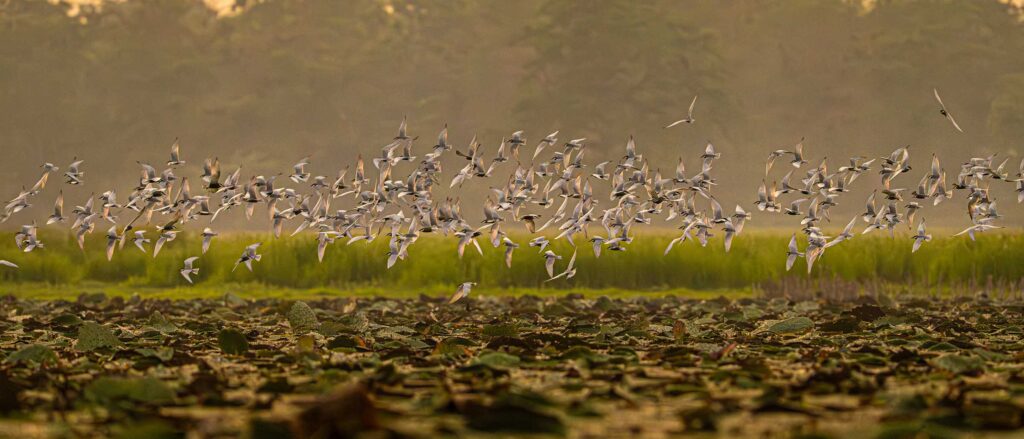
In the quiet light of early morning, Deobali Jalah awakens beneath a veil of mist. The reeds glisten with dew, dragonflies hover like sparks above still water, and distant calls of birds echo across the floodplain. Here, in the northern stretches of Nagaon district, the landscape breathes with the pulse of Assam’s monsoon rhythm — water rising and falling with the seasons, shaping a world where grass and wetland entwine. Deobali Jalah endures as a rare remnant of Assam’s natural grasslands, its spirit alive in the soft rustle of reeds, the glimmer of still waters, and the flight of birds overhead.
It isn’t marked on tourist maps or listed among India’s protected areas. But in its quiet, expansive stretches of reed beds, open pools, and grassy mounds, Deobali Jalah holds an astonishing secret — over a hundred species of birds, from Swamp Francolin to Garganey, have been recorded here. It is a living museum of ecological balance, and a fragile one at that.
Deobali Jalah is part of what scientists call the Eastern Wet Alluvial Grassland ecosystem, a habitat type once widespread across Assam’s Brahmaputra Valley. Today, only fragments remain — pockets like this one, surviving outside the safety of reserves.
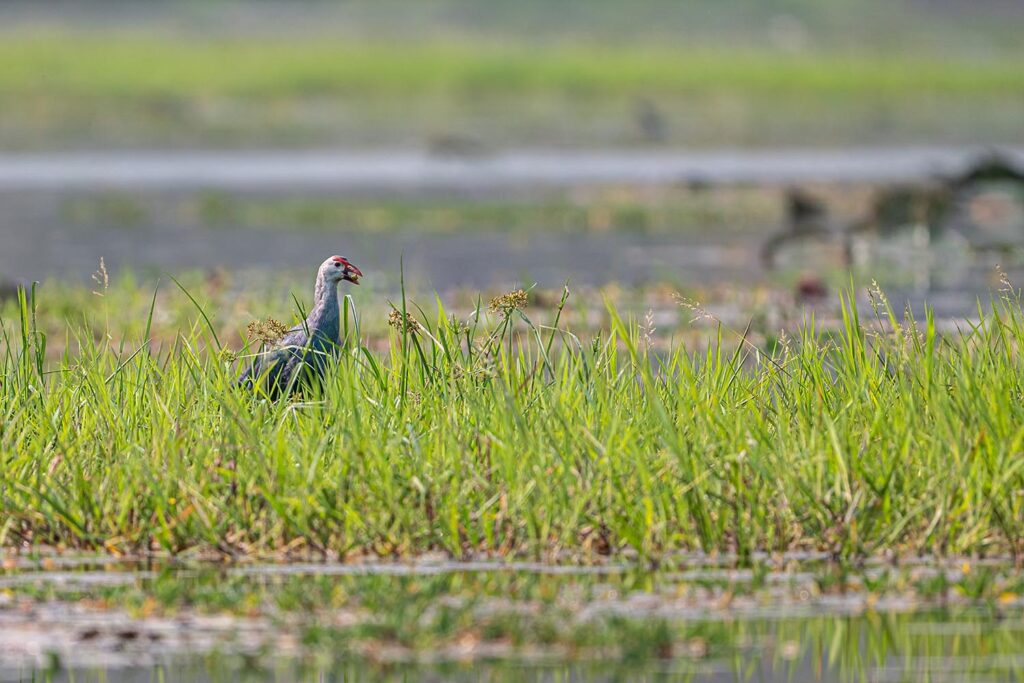
Spread across nearly 3800 Hectare, the Jalah is a flood-fed world, shaped by seasonal rhythms. When the monsoon swells, water blankets the lowlands; reeds like Phragmites karka rise tall, anchoring silt and sheltering chicks. As the waters retreat, carpets of Cynodon dactylon and Saccharum spontaneum reclaim the ground, inviting flocks of pipits, warblers, and wagtails.
This is not a static landscape. It changes with every season, every flood, every year — and that dynamism is its magic. Shallow pools mirror clouds, dragonflies flicker above still water and the soft rustle of reeds carries the sound of life hidden within. Along the edges, clusters of Barringtonia, Kadam, and Bombax trees rise like sentinels, their branches hosting parakeets, barbets, and orioles. To walk here is to move through a breathing mosaic — a landscape that belongs to both river and sky.
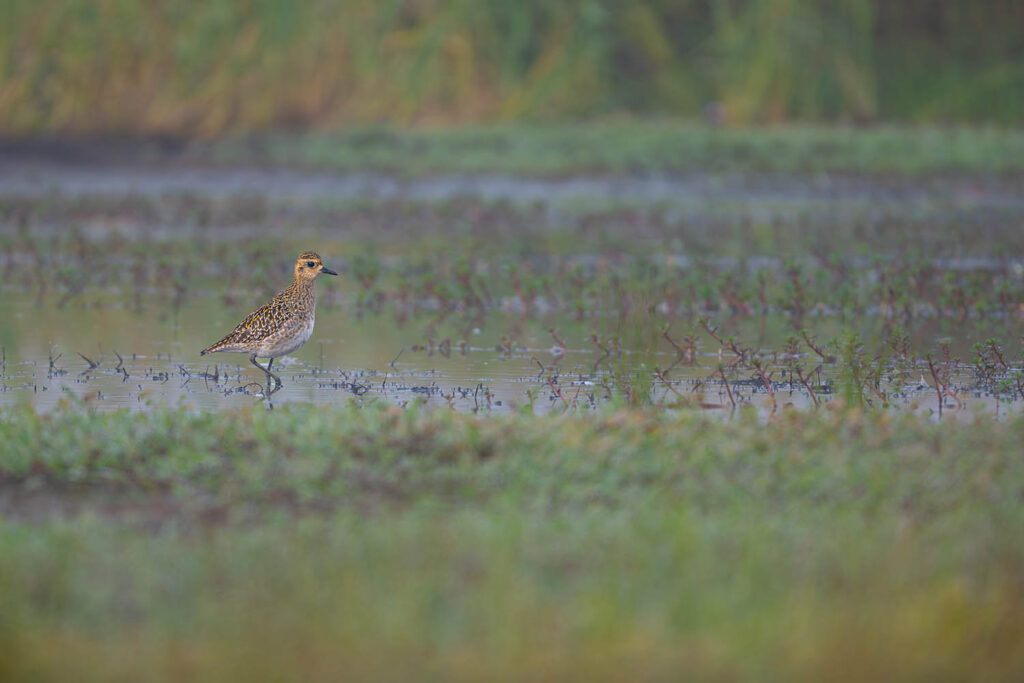
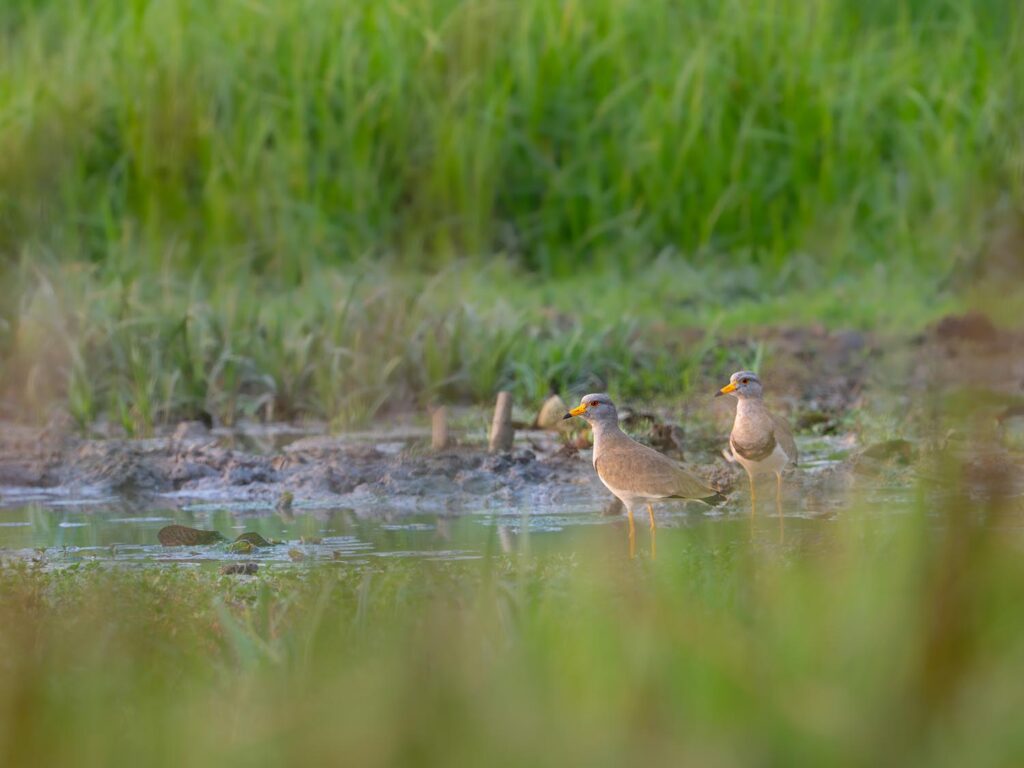
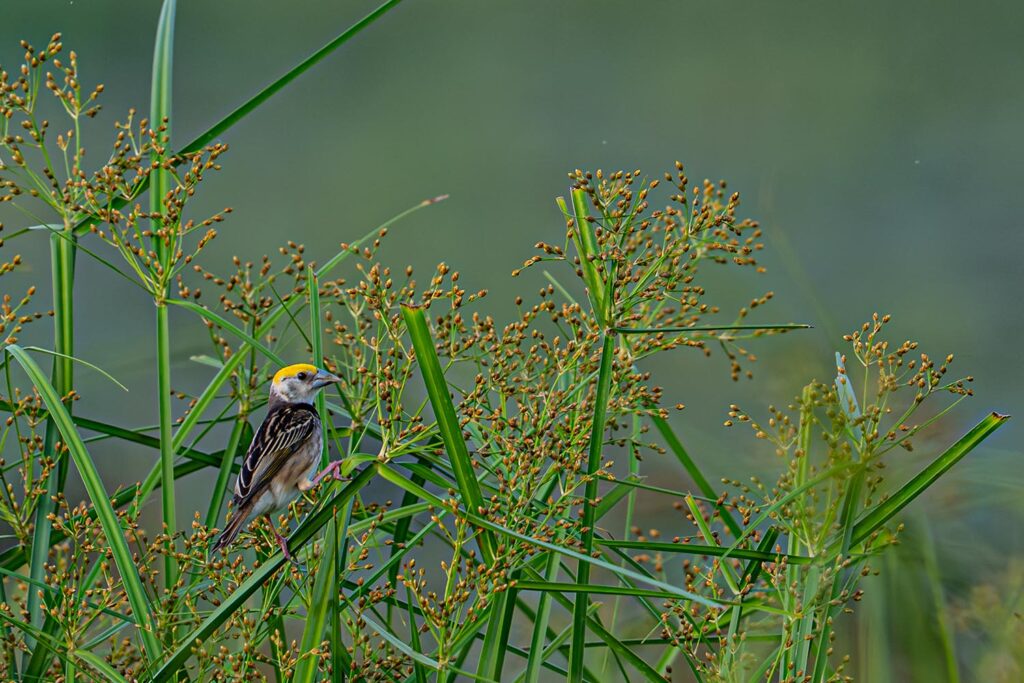
Between November 2023 and April 2025, a series of field surveys conducted by the Wildlife Sentinels Team revealed a remarkable picture of life within this Jalah. More than a hundred bird species were documented — from the slender Whiskered Tern slicing through the air above glimmering pools to the bold Yellow Bittern perched watchfully upon reed stems. Herons, egrets, storks, ducks, harriers, shrikes, weavers, and grass warblers animate every corner of this landscape, each species claiming a niche shaped by the intricate weave of grass, water, and light.
Among these observations, one discovery stands as a milestone in Assam’s ornithological record — the first documented breeding of the Whiskered Tern (Chlidonias hybrida) at Deobali Jalah. In the warmth of the season, these graceful water birds were seen nesting across the floating vegetation, their delicate nests cradled by reeds swaying gently with the breeze.
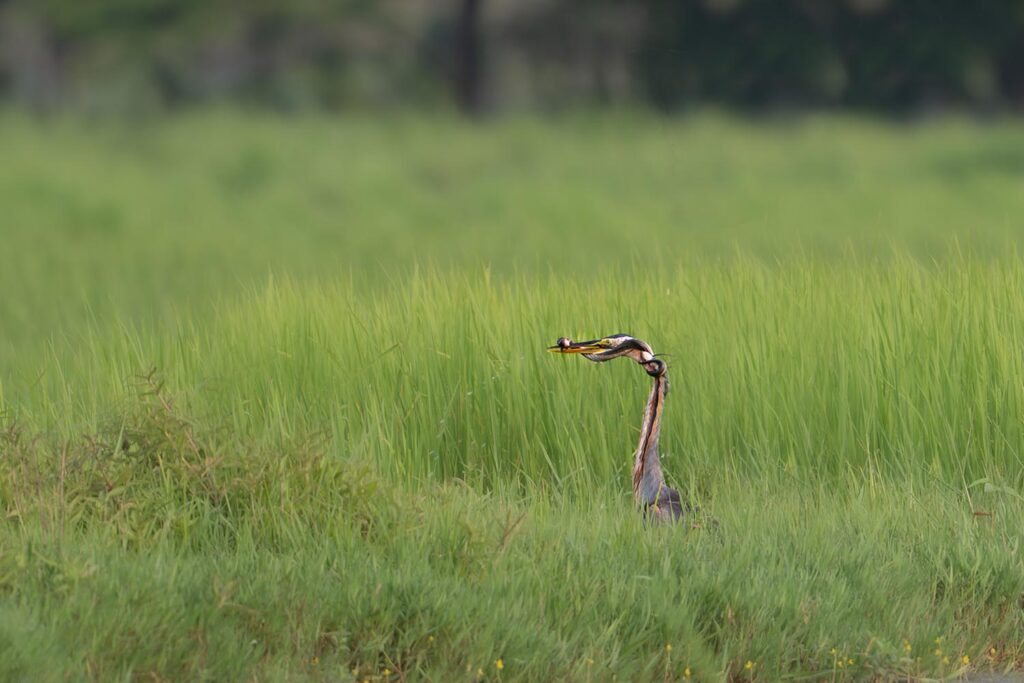
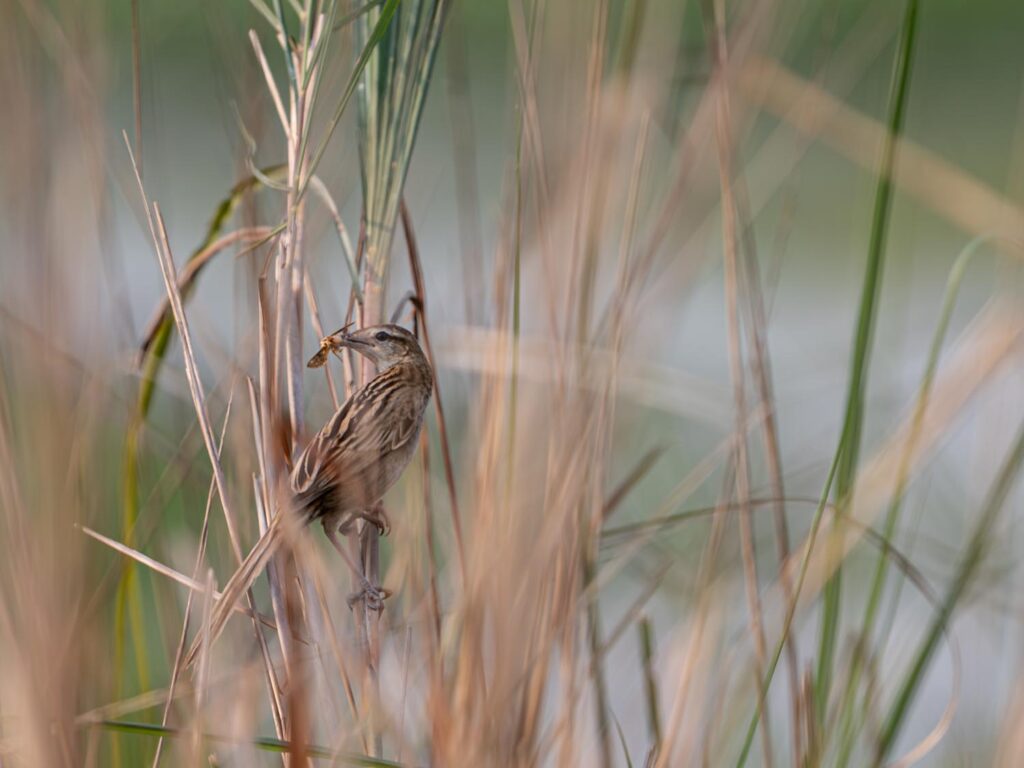
The sighting marks not only a scientific first but also a testament to the ecological health of this wetland, whose mosaic of shallow pools and emergent plants now serves as a cradle of new life. Alongside them, the soft calls of the Bristled Grass Warbler, a specialist of tall dhuli bon, and the quiet steps of the Swamp francolin through dense cover reaffirm Deobali Jalah’s role as a living refuge — a place where Assam’s disappearing grasslands still hum with renewal.
But Deobali Jalah, like many of Assam’s floodplain grasslands, stands on a knife’s edge. It is a landscape under siege — not from one threat, but from many. And yet, for all its vulnerability, Deobali Jalah still breathes. Its pulse remains strong enough to nurture flocks of jacanas, whistling ducks, and warblers. Every monsoon, new life rises from its waters — eggs hatch, chicks fledge, seeds sprout — proof that nature, given a chance, will always try again.
Conserving such a place demands more than fences and rules; it asks for empathy, knowledge, and collaboration. Deobali Jalah thrives in the shadow of villages, in a landscape shared by farmers, herders, and fishermen. Any conservation vision here must begin with them — with community-based stewardship that honors both livelihood and life.
One path forward lies in sustainable grazing management. Imagine a system where the grassland is divided into zones — livestock graze one while others rest and regenerate. Rotational grazing, paired with seasonal exclusion zones, could restore the vegetation’s natural structure while still providing fodder. Monitoring livestock numbers and matching them to the land’s carrying capacity would keep the balance intact.
Equally vital is habitat restoration. In areas overrun by single-species reeds, planting a diversity of native grasses could rebuild the structural variety birds rely on. Shallow pools and natural depressions should be safeguarded, for they serve as nurseries for fish and amphibians. Establishing buffer zones around the core grasslands would protect them from agricultural runoff and human intrusion.
Science can guide these actions, but it cannot sustain them alone. The heartbeat of Deobali Jalah’s future will depend on local communities — those who wake with its birds, graze its edges, and know its moods. Awareness programs, eco-clubs, and community-led monitoring can transform villagers into custodians. When people see the land as legacy, not resource, conservation takes root naturally.
Legal recognition would strengthen this foundation. Declaring Deobali Jalah a Community Reserve under India’s Wildlife Protection Act could bring formal protection while preserving community rights. It would allow funding for restoration, anti-poaching patrols, and research partnerships. Combined with strict enforcement against hunting and encroachment, such a step could secure the Jalah’s ecological integrity.
Long-term ecological monitoring must follow — regular bird counts, vegetation surveys, and soil assessments to track recovery and guide adaptive management. Collaborative studies with universities and conservation NGOs could unravel the finer details of Deobali Jalah’s ecology — its food webs, hydrology, and seasonal shifts — ensuring that decisions are informed, not impulsive.
Climate change adds another layer of urgency. Altered rainfall patterns and rising temperatures threaten to rewrite the Jalah’s seasonal script. Floods may come later, stay shorter, or fail altogether. To adapt, the landscape will need climate-resilient practices — water retention measures, restoration of flood-tolerant vegetation, and soil conservation techniques. Protecting Deobali Jalah is, therefore, not only about birds and grasses, but about building resilience against a future that is already arriving.
There is also a story of opportunity waiting to be told. As the world seeks green solutions and authentic experiences, places like Deobali Jalah can inspire eco-tourism grounded in education and respect. Birdwatching trails, photography workshops, and student nature camps could generate livelihoods linked to conservation, turning awareness into action and pride.
Standing at sunset on a raised mound, it’s easy to see why Deobali Jalah matters. The sky burns gold, reflections shimmer across still pools, and silhouettes of storks and jacanas drift across the horizon. This landscape — raw, rhythmic, and unguarded — is a reminder that true wilderness doesn’t always lie behind fences. Sometimes, it survives quietly in shared spaces, held together by the will of those who care.
Deobali Jalah is more than a patch of grassland; it is a living archive of Assam’s natural heritage, a place where the pulse of the floodplain still beats strong. To save it is to defend the last breath of Assam’s wet alluvial grasslands — a task not for scientists alone, but for every hand that tills, grazes, and dreams beside its waters.
If the migratory birds are to return in chorus, and the Whiskered Tern to raise its chicks in peace, it will be because we listened — to the grass, the water, and the living heartbeat of Deobali Jalah.